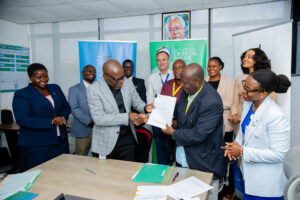

The East African Crude Oil Pipeline (EACOP) has signed three Social and Economic Investment (SEI) Funding Agreements worth over US$1.06 million (approximately TZS 2.8 billion) to strengthen healthcare infrastructure and improve access to quality medical services in Tanga and Geita Regions.
The agreements were signed in Dar es Salaam with three implementing partners: Bombo Regional Referral Hospital (Tanga), Chongoleani Ward in Tanga City, and Bukombe District Council in Geita Region.
The investment forms part of EACOP’s long term commitment to creating lasting social value in communities along the pipeline corridor by supporting critical public infrastructure that improves quality of life beyond the construction phase.
The three projects include:
- US$350,000 for the construction of a Health Centre at Bukombe Health Centre in Bukombe District, Geita Region.
- US$350,000 for the construction of a new Health Centre in Chongoleani Ward, Tanga City.
- US$363,000 for the construction of a modern Emergency Medicine Department (EMD) at Bombo Regional Referral Hospital in Tanga.
Together, these investments represent one of EACOP’s Legacy Projects focused at community Health and Safety development initiatives and are expected to improve Maternal and healthcare access for tens of thousands of people living in the project areas.
Closing critical healthcare gaps
In Bukombe District, only 7 of the district’s 17 wards currently have health centres, leaving 10 wards, including Bukombe Ward, without referral-level primary healthcare services. Residents often travel long distances on poor road networks to seek maternal, child health and emergency services, leading to delays in treatment and avoidable health complications.
The Health Centre will significantly improve access to safe delivery services, antenatal and postnatal care, child immunization, family planning, nutrition services and outpatient care, while reducing pressure on neighboring health facilities and supporting the District Council’s strategy to expand equitable healthcare services.
In Chongoleani Ward, one of the fastest-growing peri-urban communities in Tanga City, increasing economic activities and population growth have outpaced available healthcare infrastructure. The new health centre will serve more than 6,000 residents from Putini, Ndaoya and surrounding communities by bringing essential healthcare services closer to where people live.
The facility will include maternity services, outpatient care, water and sanitation infrastructure and other essential support facilities built to Ministry of Health standards. Once operational, it is expected to reduce travel distances, improve maternal and child health outcomes, strengthen disease prevention programmes and decongest existing health facilities.
Strengthening emergency healthcare in Tanga
The third investment will support the construction of a modern Emergency Medicine Department at Bombo Regional Referral Hospital, one of Tanzania’s oldest referral hospitals, established in 1901, and the principal referral hospital serving the Tanga Region.
Although the hospital has a design capacity of 600 beds, its current emergency department operates under significant infrastructure constraints despite providing 24 hour emergency services and treating approximately 24,775 emergency patients in 2024.
The existing department has only three treatment rooms, two adult resuscitation rooms, one paediatric resuscitation room, and an emergency theatre that is currently non-operational due to structural challenges. The facility is staffed by only 30 healthcare workers, including two Emergency Physicians, who continue to provide lifesaving care under increasingly demanding conditions.
With rapid industrial growth, expanding economic activities and increasing population in Tanga, the demand for emergency healthcare continues to rise. The upgraded Emergency Medicine Department will strengthen emergency preparedness, improve trauma care and reduce the need for critically ill patients to travel 196 kilometres to Dar es Salaam or 296 kilometres to Kilimanjaro to access advanced emergency services.
The hospital also plays a vital role in providing emergency stabilization for EACOP employees, contractors and surrounding communities, making the investment beneficial to both the local population and the wider regional healthcare system.
Investing in sustainable community development
These projects reflect EACOP’s commitment to delivering sustainable social investments that respond directly to priorities identified by local government authorities and communities. By improving access to quality healthcare, the investments will contribute to healthier families, safer pregnancies, stronger emergency response systems and more resilient communities.
The projects also support Tanzania’s national health priorities and contribute to the achievement of the Sustainable Development Goals, particularly those relating to good health and well-being, while reinforcing EACOP’s commitment to creating shared value and maintaining a strong social licence to operate in the communities where the project is implemented.
As construction progresses, the three facilities are expected to leave a lasting legacy by expanding access to essential healthcare services for current and future generations, ensuring that the benefits of the EACOP Project extend well beyond the pipeline itself.