
Unlocking East Africa’s Potential

The management of grievances is a central part of the stakeholder engagement process. The Project has developed a Grievance Management Procedure which is a step-by-step approach for receiving, acknowledging, and registering, reviewing, investigating and resolving complaints and grievances from all Project affected stakeholders.
This Project level Grievance Management Procedure reflect the Project’s commitment to ensuring that communities and individuals adversely affected by the Project are able to raise a grievance so that it can be remediated.
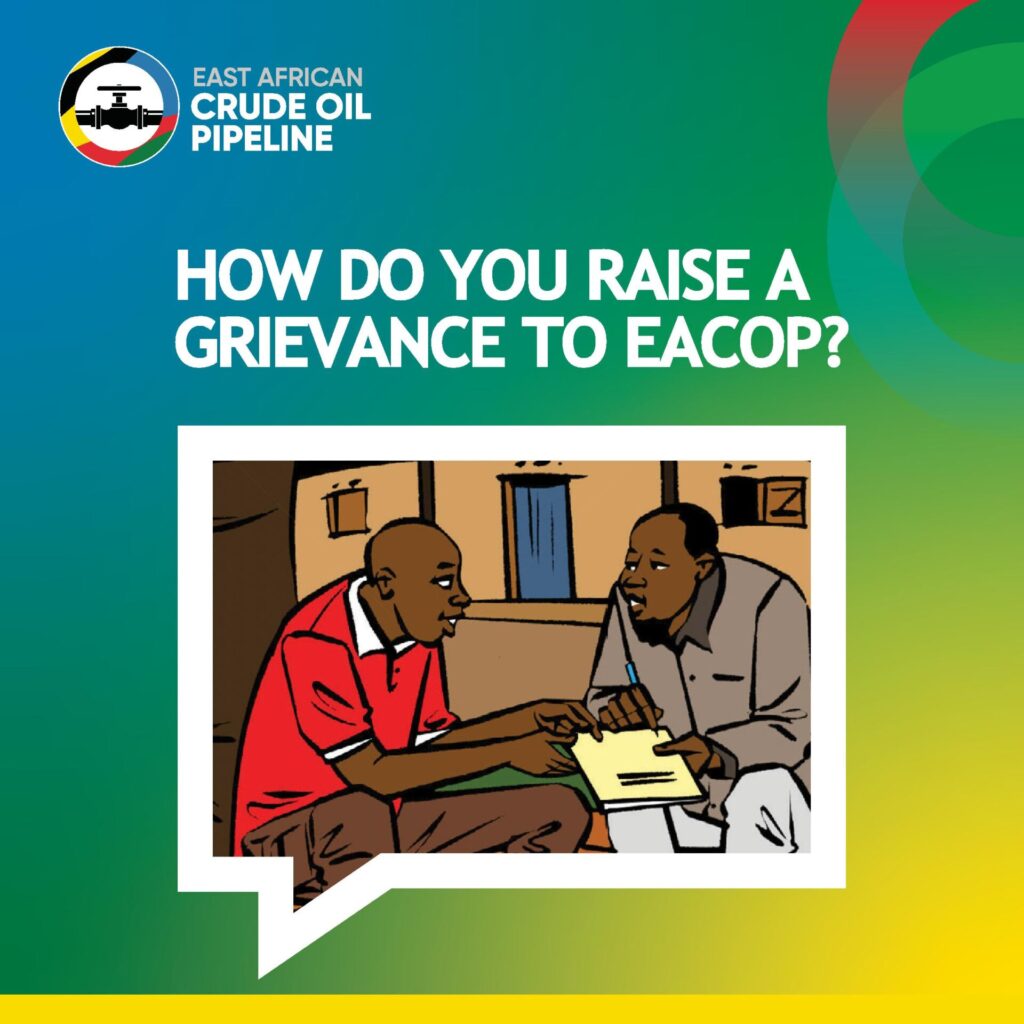
As part of their regular engagement with stakeholders, EACOP stakeholder engagement team ensure that the Grievance Procedure is well known and understood by local communities who need clear information, in a summarized form, adapted to the local context and language, and combined with practical explanations about the following points:
Note:
Sensitive cases requiring confidentiality are referred to the independent NAVEX mechanism, while grievances from vulnerable persons are prioritized for expedited handling.
Findings and proposed resolutions are communicated to the complainant, and agreed actions are implemented and monitored to completion. Where resolution is not achieved, grievances are escalated through defined appeal levels before formal closeout, without limiting access to judicial remedies.
East African Crude Oil Pipeline Project (EACOP) is committed to an environment where open, honest communications are the expectation, not the exception. We want you to feel comfortable in approaching your supervisor or management in instances where you believe violations of policies or standards have occurred.
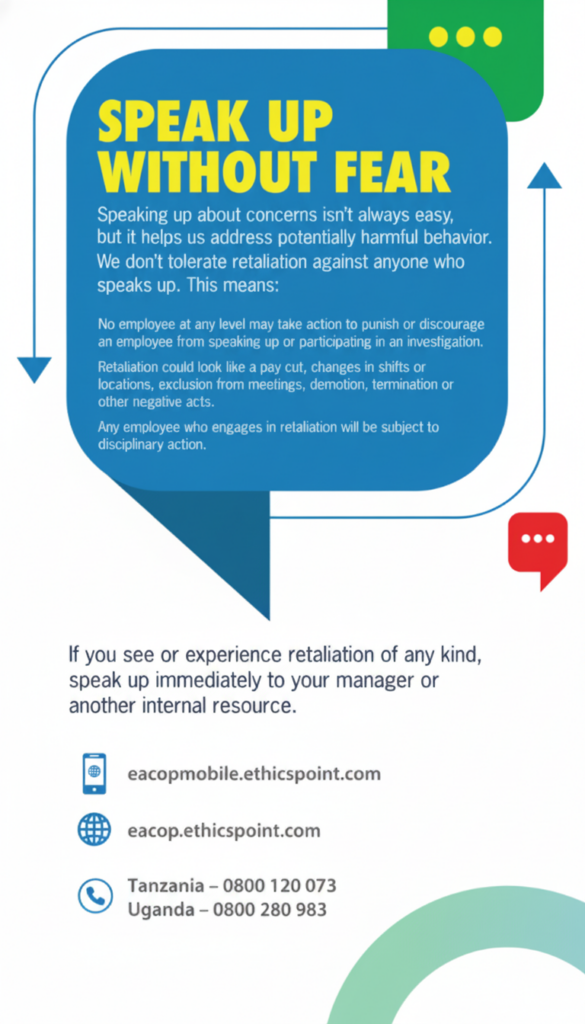
In situations where you prefer to place an anonymous report in confidence, the information you provide will be sent to us by EthicsPoint on a totally confidential and anonymous basis. You have our guarantee that your comments will be heard.
After you complete your report you will be assigned a unique code called a “report key.” Write down your report key and password and keep them in a safe place. After 5-6 business days, use your report key and password to check your report for feedback or questions.


RR Pearl Tower One,Plot 1, Yusuf Lule Road
P.O.Box 135596,
Kampala, Uganda
Tel: +256 (0) 767 988 008,
Toll Free: 0800 216 000
Email: [email protected]
18th Floor, 10 Upper Bank Street, London, United Kingdom E14 5BF
Msasani Penninsula,
Plot no. 1403
Bains Avenue off Chole Road.
P. O. Box 23139,
Dar es Salaam, Tanzania
Email: [email protected]