Land Acquisition & Resettlement

Project Affected Persons (PAPs)

UG
TZ
Total
Total number
3,759
9,927
13,686
Compensation agreements signed
3,743 (99.6%)
9,877 (99.5%)
13,622 (99.5%)
Compensations paid
3,743 (99.6%)
9,875 (99.5%)
13,612 (99.5%)

Physically displaced houses

UG
TZ
Total
Number of households
195
344
539
Number of replacement houses (*)
177
343
520
Replacement Houses Handed Over
177
343
520

Note!

The content is up-to-date as of November 2026.

EACOP requires land access for two main purposes:

1. Permanent facilities for the construction and operation of the pipeline,

2. Priority Areas related to land required for construction purposes

There will also be both permanent and temporary access roads to the various facilities. The land acquisition process complies with National legislative requirements and the relevant International Financing Standards (IFS) captured in the Equator Principles (EP) IV and the Performance Standards (PS) of the International Finance Corporation (IFC).

Under the Host Government Agreements, it is set out that whilst EACOP is responsible for the execution of the land acquisition process including all administrative costs and payment of compensation, the land is owned by the Host Governments and leased back to EACOP.  These leases are for 66 years for the permanent facilities and 5 years for the Priority Areas.

Although the pipeline route was designed to minimize environmental and social impacts, some physical displacement (loss of shelter) and economic displacement (full or partial loss of livelihoods) were unavoidable. These impacts affected individuals and households to varying degrees. 

Summary statistics are presented below (PAPs = Project Affected Persons), generally refer to households but may also include institutions and community property.

A Resettlement Policy Framework (Tanzania) and twelve (12) Resettlement Action Plans (RAPs) have been developed for the Project – one RAP for the entire 296km Uganda section, and 11 RAPs for the 1,147km Tanzanian section comprising of one RAP for the Priority Areas in Tanzania and eight RAPs for each of the Regions with permanent facilities.

These documents summarise the Project’s land requirements and the   acquisition process, affected communities and households, compensation eligibility and entitlements, provisions for vulnerable people, in-kind compensation options such as replacement housing, transitional support, livelihood restoration programmes and implementation and monitoring arrangements.

In summary the RAPs set out EACOP Project commitments which include:

Current Status

Initial land delineation and asset surveys were conducted, and the resulting valuation reports were developed and approved by the relevant authorities between 2018 and 2020.

Delays in the Final Investment Decision created a gap between RAP planning and RAP implementation.

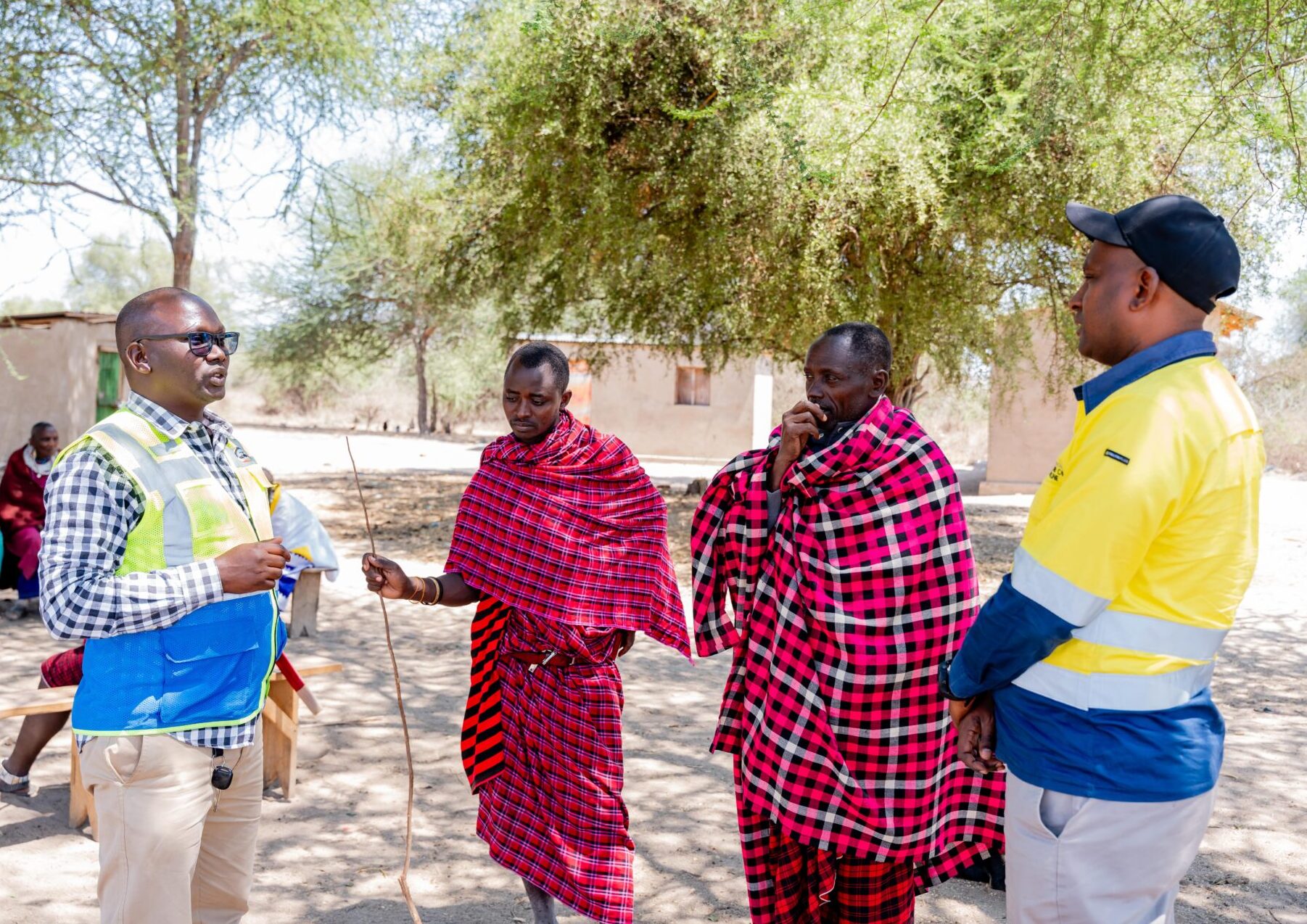
During this period, EACOP maintained communication with PAPs, advising them to continue farming their land and caring for their trees and structures as usual (link to document showing this communication).  Because PAPs had not yet been informed of their compensation entitlements, signed compensation agreements, or received payment, none were asked to leave their land.

Actual signing of compensation agreements and payment of compensation commenced

Compensation Calculation

Although cash compensation was calculated differently in the two countries, both approaches generally included the following elements to ensure payment at full replacement value:

An inventory of each PAP’s land, trees, crops, structures and other assets was recorded. compensation rates were established and approved by the respective Chief Government Valuers.

The compensation amount was calculated by applying the approved rates to the recorded inventory.

A statutory disturbance allowance was then applied.

Where applicable, additional allowances for transitional support and grave relocation were also included. An uplift factor was applied to compensation to account for delays between assessment and the payment ensuring full replacement value at the time of payment.

EACOP maintains an accessible, transparent and effective grievance management mechanism in both Tanzania and Uganda Grievance Mechanism It provides stakeholders with safe and reliable channels to raise concerns, seek clarification, report actual or perceived impacts and obtain timely feedback without fear of retaliation or restriction of access to other remedy options. 

PAPs have access to a Grievance Mechanism

Payment of Compensation

EACOP assisted PAPs, where applicable, in opening joint bank accounts with their spouses and provided financial literacy training. The accounts were operated free of charge. Compensation was paid to households following the signing of their compensation agreements.

Following payment of compensation and acknowledgement of receipt by the PAPs, EACOP issued each affected household with a 90-day notice to vacate the land. During this period, EACOP supported households in harvesting their crops, salvaging reusable building materials and vacating the land.

Replacement House Construction

In 2021 and the first half of 2022, physically displaced PAPs were given the option of choosing between replacement houses and cash compensation. Approximately 90% of eligible PAPs opted for replacement houses.

EACOP engaged affected households throughout the design process. Replacement houses were designed by locally certified architects, with each house being at least as large as the affected structure, built to a higher standard and compliant with national building guidelines and requirements. In addition, households were provided with external kitchens, ventilated improved pit latrines, solar panels, and rainwater harvesting and storage systems.

Affected households were fully informed of the housing designs and available options to enable them to make informed decisions. They also participated in determining the placement of replacement houses and ancillary structures within their plots before construction commenced.

Replacement houses were completed before households were issued with notices to vacate their land. This approach ensured that PAPs could move directly into their new permanent homes, consistent with good practice, with temporary accommodation considered only in specific circumstances.

Livelihood Restoration Programmes

Livelihood restoration programmes are accessible to eligible Project Affected Persons and their households. The types of Livelihood Programmes are described in the RAPs and adapted to local conditions and needs.  There is a strong focus on support for agriculture, crop diversification, livestock management and enterprise development.

As an example, at the coating plant site in Tanzania, the first harvest for affected households was significantly increased following the training, support and inputs provided. Livelihood restoration programmes are expected to run for 2-3 years until households’ livelihoods are restored.

Agricultural Improvement Program

This Program aims to enhance the livelihoods of Project Affected Persons (PAPs) by providing practical, hands-on training in modern farming techniques and designed to increase agricultural productivity and resilience among affected households.

Enterprise Development and Vocational Skills Training

These programs aim to boost the capacity of affected households to earn income and improve resilience through self-employment or paid employment. Over 5000 youths have been trained in disciplines.

Water Provision Program

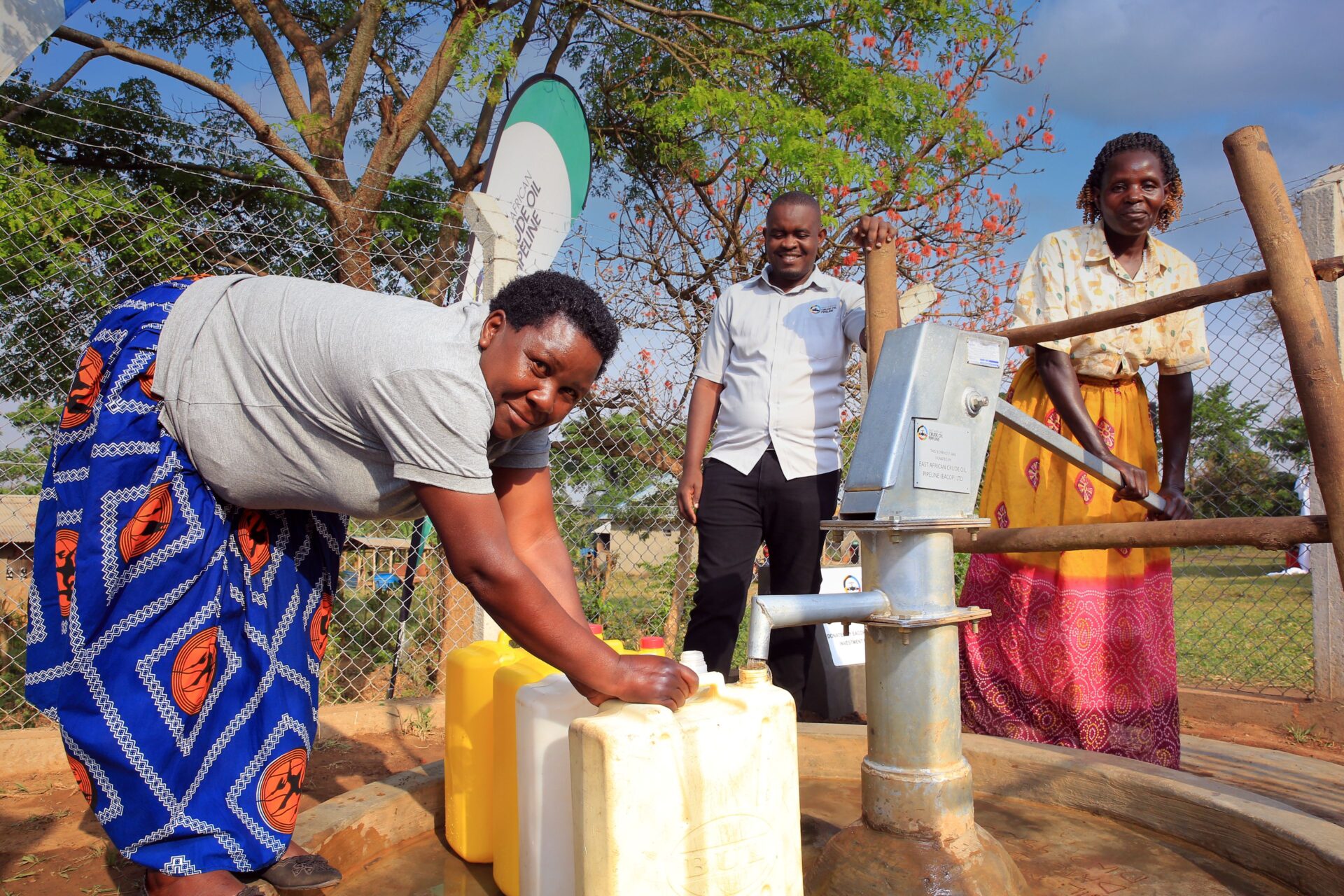
EACOP has undertaken initiatives to improve access to safe and clean water for communities affected by the pipeline project. This includes the construction and rehabilitation of boreholes to provide reliable sources of potable water, thereby enhancing community health and well-being.

Access to Finance

EACOP provides financial literacy and money management training to Project Affected Persons as part of its livelihood restoration programs. These trainings are designed to help PAPs effectively manage compensation funds and improve their economic well-being.

Kabajjo Memorial School Constructed in Sembabule District as In-Kind compensation to replace affected classroom block

Kabajjo Memorial Junior School, situated in Sembabule District, Uganda, was affected by the East African Crude Oil Pipeline (EACOP) project’s Right of Way (ROW). In line with its Environmental and Social Impact Assessment (ESIA) commitments, EACOP collaborated with the school’s leadership to provide in-kind compensation. The school opted for the construction of a new, modern classroom block to replace the affected structure.

The new facilities were completed and handed over by November 2024, offering an enhanced learning environment for students. This initiative underscores EACOP’s commitment to responsible project implementation and positive community engagement. The improved infrastructure not only addressed the project’s impact but also contributed to the school’s academic achievements and bolstered the community’s confidence in the educational system.