
EACOP is committed to meeting the requirements of the International Finance Corporation’s (IFC) Performance Standard 6 (PS6) on Biodiversity Conservation and Sustainable Management of Living Natural Resources. This requirement is met through conducting a critical habitat assessment (CHA).
IFC PS6 stipulates application of the mitigation hierarchy; avoid, minimize, restore, offset. If significant residual impacts on biodiversity remain after all feasible avoidance, minimization and restoration actions have been taken, offsets must be implemented to deliver Net Gain (NG) for biodiversity where Critical Habitat (CH) is impacted or No Net Loss (NNL) where Natural Habitat has been impacted.
The CHA identifies the significant residual impacts and provides the foundation for Biodiversity Plans (Uganda, Tanzania and the marine environment) that set out the actions to achieve the PS6 required outcomes.
These plans are the Biodiversity Action Plan (BAP) that identifies the residual impact on CH and NH, the Biodiversity Offset Management Plan that describes the offset activities and their implementation and the Biodiversity Monitoring and Evaluation plan to ensure the offsets are sustained.
EACOP has started the implementation of offsets in Uganda, Tanzania and the marine environment. The biodiversity team, in collaboration with the CHA consultant, has developed scopes of work (SoW) for all the required offsets. Implementers have been engaged directly by the project but in most cases the implementation is through conservation trust funds, the Uganda Biodiversity Fund and the Tanzania Environmental Sustainability Trust (Chakwetu) who identify and engage the offset implementers. Presently, 19 offsets are underway with several more getting started after additional data has been collected allowing for the finalization of the SoW.
The biodiversity offset program in Uganda is well underway and consists of several activities that are aiming not only to achieve NNL or NG but that also are designed to provide significant contributions to conservation. Some examples are the development of a Northern Albertine Rift Chimpanzee Action Plan (NARCAP) that will support a landscape wide approach aiming at improving forest block connectivity. The NARCAP will be aligned with the GoU’s National Chimpanzee Conservation Strategy and will require collaboration with all stakeholders in this landscape.
Another offset target is the Rwizi River’s watershed and associated wetlands that contribute to the Samuka RAMSAR site located to the east of the pipeline ROW. This offset addresses the residual impacts on wetland crossings by the pipeline into one comprehensive offset for the Rwizi wetland ecosystem resulting in the greatest gain, including for the important and large grey crowned crane population in this wetland.
The RoW enters only one protected area in Uganda, Taala Forest Reserve (FR). This FR has mostly been converted but EACOP in collaboration with the NFA have identified the remaining section of NH for restoration and the enhancement of ecosystem services in collaboration with the surrounding communities.
EACOP and the Tanzania National Park Authority (TANAPA) have signed a Memorandum of Understanding for the development of a General Management Plan (GMP) for Burigi Chato National Park (BCNP) which is traversed by the RoW. BCNP is a new park that was gazette after the pipeline RoW had already been defined and is little known. The offset therefore aims at conducting extensive baseline surveys to support the development of the GMP which, in its turn, will provide a vehicle for an offset for the endangered ashy red colobus.
The landscape traversed by the RoW provides habitat, at low densities, to large mammals and includes wildlife corridors. EACOP is in the process of supporting a REDD+ project for the Kitwai Game Controlled Area (GCA) that incorporates management of wildlife corridors thus benefitting large mammals but also the protection of acacia commiphora woodland.
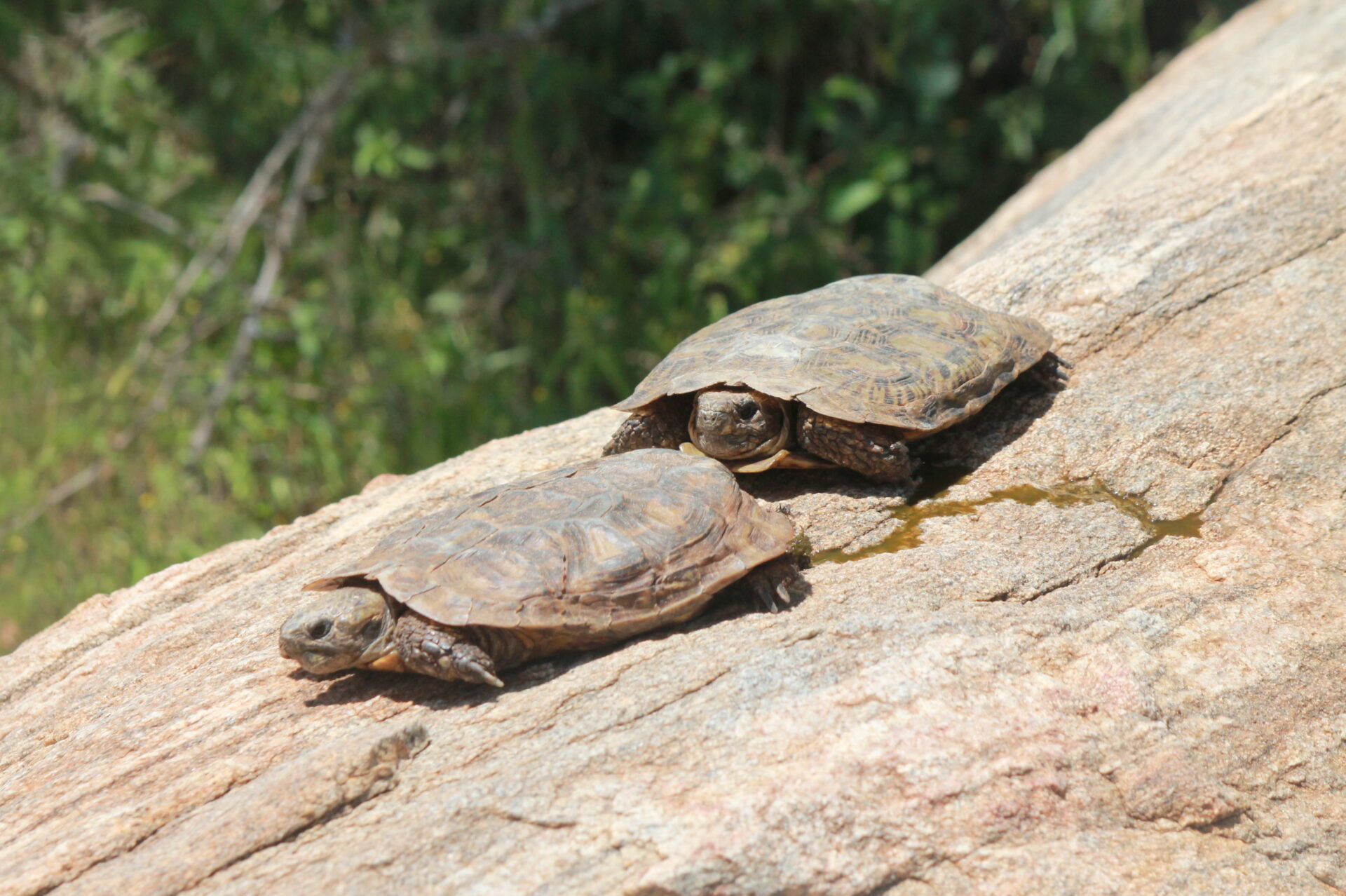
The pipeline RoW also passes through the critically endangered pancake tortoise habitat. EACOP is presently working to develop a Species Action Plan in collaboration with local communities that will include education and awareness raising to reduce live animal trade and a survey for pancake tortoise “hotspots”.
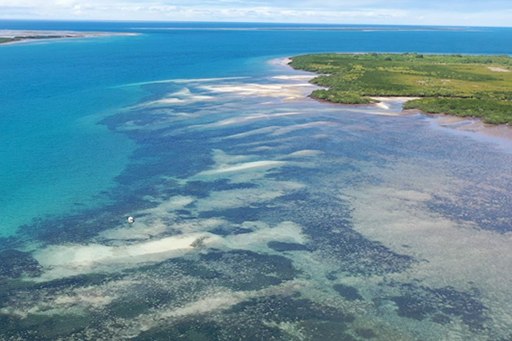
EACOP offsets include seagrass, mangrove and coral reef restoration, a study of the Indian Ocean humpback dolphin to provide the baseline for a conservation effort for this elusive species, and a humpback whale telemetry study aimed at developing an understanding of their movements. By implementing the offsets with local community participation, we are also raising awareness on the value of these habitats as well as more effective and sustainable management of marine livelihood resources.
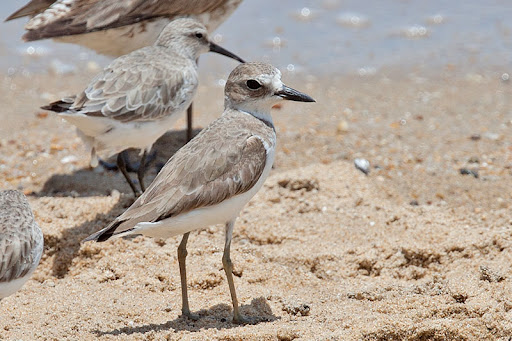
Other offset activities that EACOP has initiated include support for a study to better understand local and migratory movements of the shorebirds along the West Asian – East African Flyway. This flyway is a major migratory pathway between wintering and breeding grounds for shorebirds and there is a lack of information about its use, this will enable monitoring, further studying communication, and advocacy, of the conservation status of these species and enhance the sustainable development of these coastal habitats.
We continue to conduct additional studies to further refine and deepen our understanding of the diverse environmental and social elements along the pipeline route. This includes a critical habitat assessment
RR Pearl Tower One,Plot 1, Yusuf Lule Road
P.O.Box 135596,
Kampala, Uganda
Tel: +256 (0) 767 988 008,
Toll Free: 0800 216 000
Email: [email protected]
18th Floor, 10 Upper Bank Street, London, United Kingdom E14 5BF
Msasani Penninsula,
Plot no. 1403
Bains Avenue off Chole Road.
P. O. Box 23139,
Dar es Salaam, Tanzania
Email: [email protected]