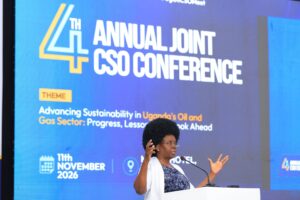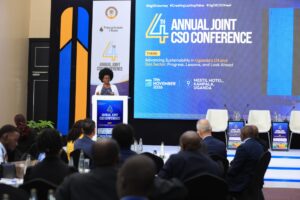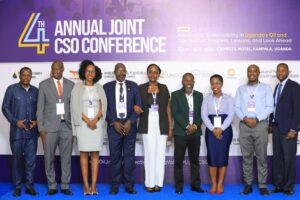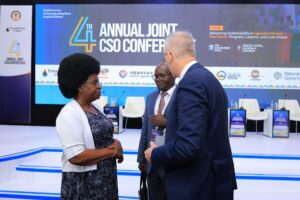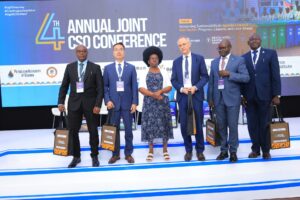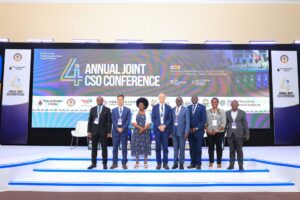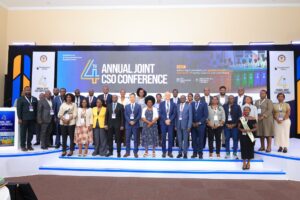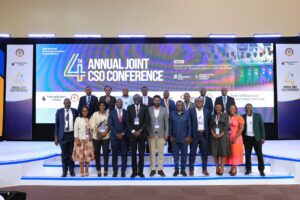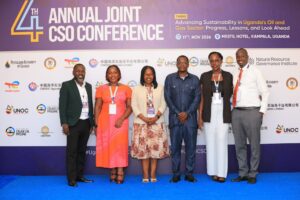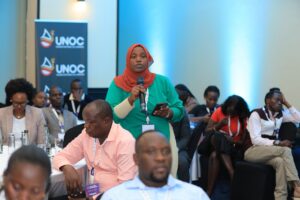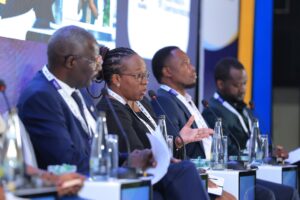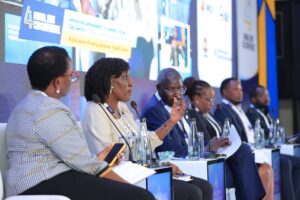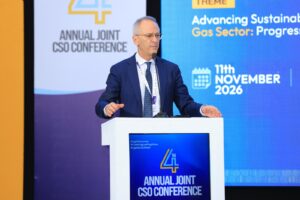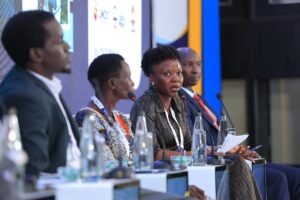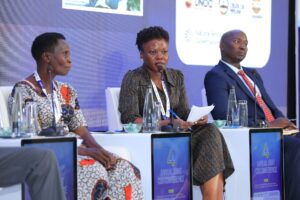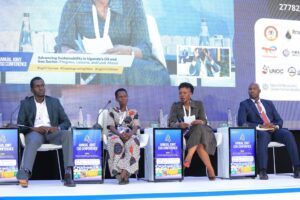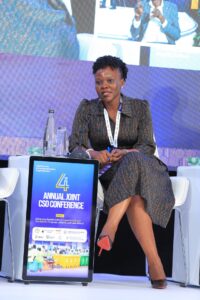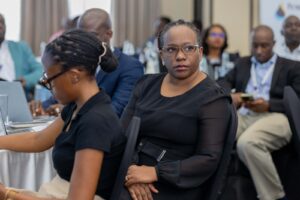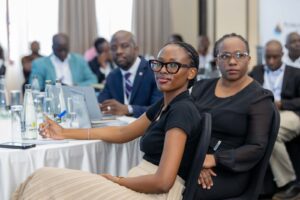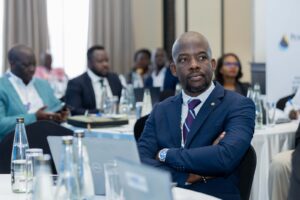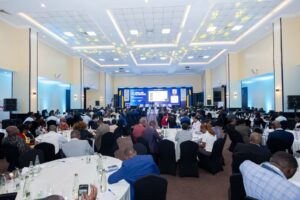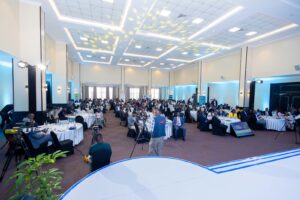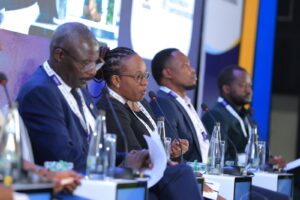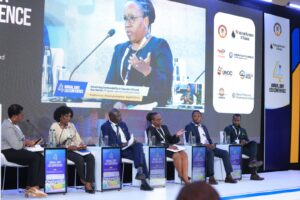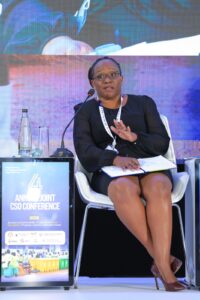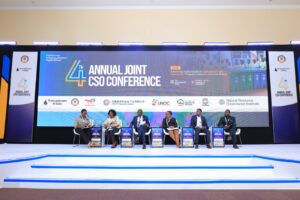
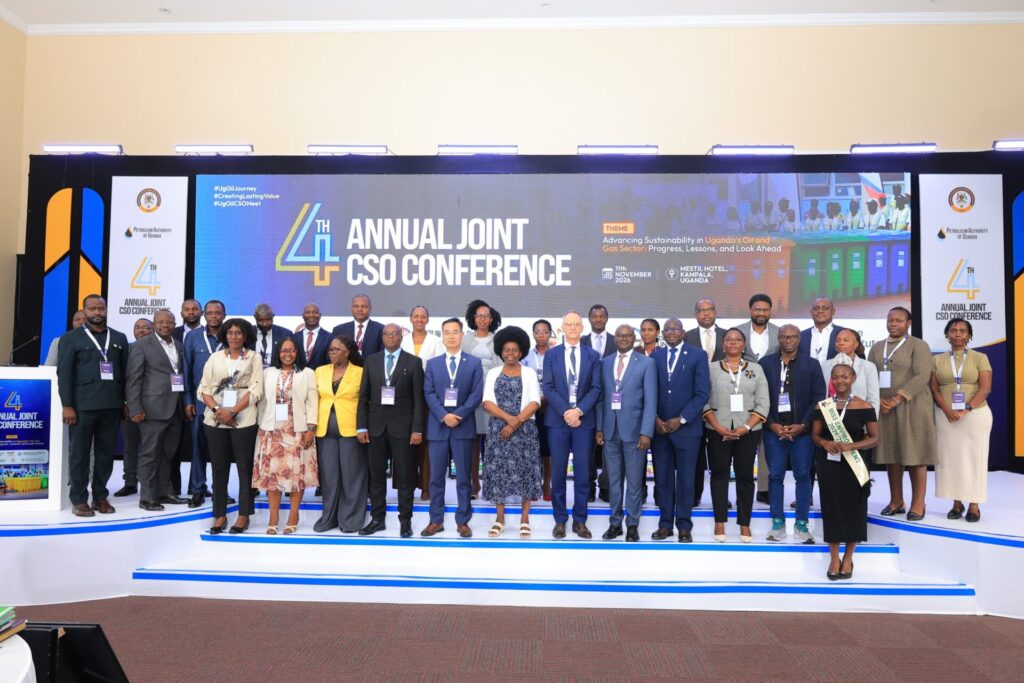
EACOP participated in the 4th Annual Joint Civil Society Conference held under the theme “Advancing Sustainability in Uganda’s Oil and Gas Sector: Progress, Lessons, and Look Ahead,” which brought together industry players, government representatives and civil society organisations to discuss progress, share experiences and explore opportunities for advancing sustainable development in Uganda’s petroleum sector.
Speaking at the conference, EACOP’s Deputy Managing Director John Bosco Habumugisha emphasised that sustainability should be measured by the lasting impact of development initiatives.
“True sustainability is measured not by the number of activities we undertake, but by the lasting impact we create. As we develop EACOP, our responsibility goes beyond delivering a pipeline; it is about building a legacy that will serve not only the generation of today but also those yet to come,” he noted.
Hon. Dr Monica Musenero, Minister of Energy and Mineral Development, highlighted the importance of innovation in ensuring that Uganda’s petroleum resources translate into meaningful benefits for its people.
“Change is an opportunity for innovation. It is an opportunity for us to think about the next tier of development and create systems that will deliver sustainable outcomes for generations to come. Sustainability is not static. If we become a country where oil is extracted but the benefits do not touch the lives of Ugandans, then there is no sustainability,” she said.
EACOP also contributed to two panel discussions. Charity Tushemereirwe, Environmental Engineer, participated in a discussion on Measuring Sustainability Progress in Uganda’s Petroleum Sector, where she highlighted the project’s efforts to eliminate single-use plastics. With approximately 12,000 workers across Uganda and Tanzania, the introduction of reusable water bottles has eliminated the need for an estimated 72,000 single-use plastic water bottles daily and over 26million bottles annually. The project has also eliminated the use of plastic bags across all its operations.
Barbara Nakayenze, Project Induced-In Migration and Human Rights Manager, highlighted the importance of embedding human rights into everyday project activities. She noted that human rights is not a standalone function, but a cross-cutting responsibility connected to environmental management, stakeholder engagement and overall project implementation. She further emphasised how EACOP’s human rights approach has evolved alongside the project.
The discussions reinforced EACOP’s commitment to integrating environmental responsibility, respect for human rights and meaningful stakeholder engagement into its operations, while contributing to a sustainable legacy for Uganda, Tanzania and the entire region.