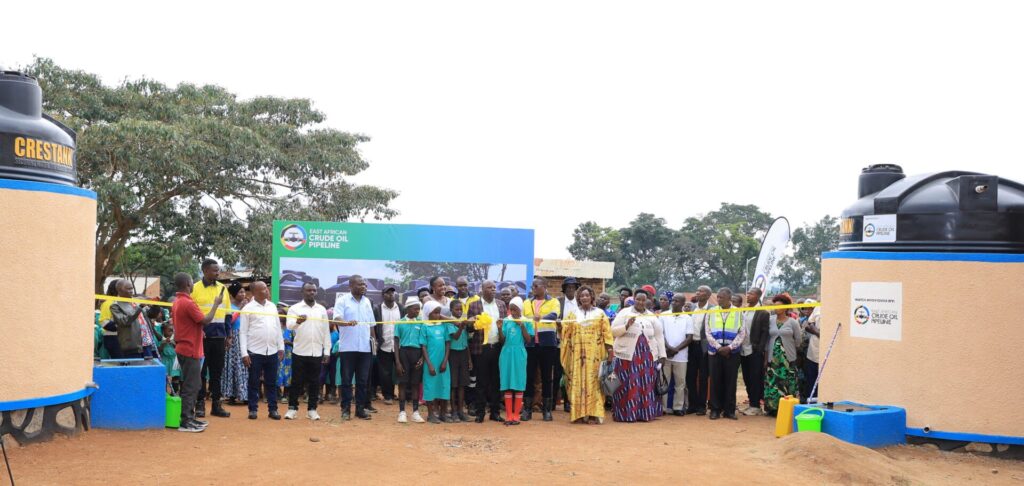
On 12th August 2025, in Buzirandulu Village, Sembabule District, the East African Crude Oil Pipeline (EACOP) Ltd. handed over 14 rainwater harvesting tanks to the local community. This initiative will provide clean and safe water to approximately 140 households, alleviating water scarcity and improving community health.
The project is part of EACOP’s Socio-Economic Investment (SEI) initiatives under the Water Solutions pillar. It builds on previous efforts where the company drilled and rehabilitated over 25 water sources, benefiting more than 375 households in the districts of Lwengo, Kakumiro, Kikuube, Mubende, Kyankwanzi, Kyotera, and Rakai.
This effort aligns with the National Development Plan III (NDPIII) 2020–2025, which prioritizes human capital development through improved health, safety, and access to water. The government aims to raise safe water supply coverage from 70% to 85% in rural areas and from 74% to 100% in urban areas.
Speaking at the handover ceremony, our Social Performance Manager, Rosie Birungi, reaffirmed the company’s dedication to enhancing community well-being: “Access to clean and safe drinking water remains a significant challenge in Uganda. While there have been improvements, many rural communities still lack this vital resource. By providing clean water, the East African Crude Oil Pipeline is empowering host communities to lead healthier and more productive lives.”
This initiative also supports the United Nations Sustainable Development Goal 6 (SDG 6), particularly target 6.1, which calls for universal and equitable access to safe and affordable drinking water by 2030.
The project began in January 2023 as part of EACOP’s Resettlement Action Plan (RAP) and involved collaboration with local government representatives, District Water Officers, and community water committees. It adheres to national policy and technical guidelines, ensuring compliance with safe drinking water standards.
EACOP has called on district authorities and stakeholders to monitor water facilities regularly, assess their performance, and strengthen water user committees to ensure sustainability.